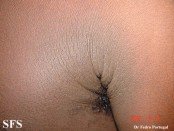
What is acanthosis nigricans? Acanthosis nigricans is a type of skin condition characterized by thick dark (hyperpigmented) skin which tends to occur on the skin folds – armpits (axillae), neck, and groin. Typically the hyperpigmented skin has a velvety texture and can therefore be clearly differentiated from >> Read More ...
What is the calorie count of food or exercise? A calorie count is the amount of energy potential in foods and the energy expended in activity. Energy is measured in calories or joules. Since the body uses so many tens of thousands of calories and joules every day, the kilocalorie (kCal) and kilojoule (kJ) are often >> Read More ...
Compound fractures are one of the most devastating injuries, which commonly occur due to motorbike and car accidents or similar high velocity injuries. They are not only difficult to recover from, but are also prone to develop several life-threatening infections and complications. The deformities caused by compound >> Read More ...
What is Fetal Alcohol Syndrome? Fetal alcohol syndrome (FAS) is not a single disease but a range of disorders which include numerous physical and mental problems, as well as various developmental defects, that may occur as a result of alcohol consumption by the mother while pregnant. No amount of alcohol is considered safe >> Read More ...
The eye has two main areas which are filled with different substances. The anterior segment (front) which constitutes about 20% of the area is filled with a clear watery fluid know as the aqueous humor. It lies between the cornea and the front surface of the lens. The posterior segment (back) which accounts for the >> Read More ...
The path of light through the eye needs to be uninhibited in order to form a clear image on the retina. The light-sensitive receptors then elicit impulses which are sent to the central nervous system for processing. In order to achieve this, the tissues of the eye has several specialized properties to ensure that it is >> Read More ...
Diabetes mellitus is a metabolic disorder where a deficiency of insulin or the unresponsiveness of cels to insulin leads to elevated blood glucose levels. Proper treatment and effective management can help delay or even avoid certain complications associated with diabetes mellitus but eventually its effects become evident. >> Read More ...
Joints are the flexible parts of the body that allow for various degree of movements between two or more bones. In order to understand the anatomy of the wrist and hand joints, it is first important to identify all the bones in this part of the upper limb. The bones of the forearm include the radius and ulna which extend >> Read More ...
The hearts has its own electrical system to control the rate and rhythm of the heart beat. Impulses are generated in the sinoatrial node (SA node) and immediately cause the muscles of the atria to contract. This pushes blood into the ventricles. The impulse travels along the internodal pathways to the atrioventricular node >> Read More ...
The alimentary tract extends from the mouth to the anus. Food or drink, once swallowed, should only travel in one direction – down the alimentary tract. From the mouth it passes into the throat with voluntary swallowing and then reflexes coordinate involuntary processes that transports the food or drinks down the >> Read More ...