The skeletal system is made up of some 206 bones in adults which provides form for the soft tissues of the body, protection and a hard lever structure for the muscles. Bones are much more than calcified masses that are present in various shapes and is living tissue just like any other part of the body. These are dynamic >> Read More ...
Inflammatory bowel disease (IBD) is a chronic inflammatory disease of the bowels, mainly affecting the colon and often involving the neighboring parts of the gut. Although the exact cause of inflammatory bowel disease is unknown, it appears to be associated with a genetic defect on the mucosal lining of the bowels and/or >> Read More ...
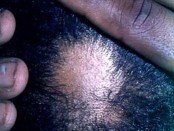
What is alopecia areata? Alopecia areata is a patchy hair loss that is usually of sudden onset and can arise on any hairy part of the body. It is a non-scarring type of hair loss with no obvious skin disease or lesion or other underlying systemic disturbance. Most cases involve the scalp or beard and rarely it can all of >> Read More ...
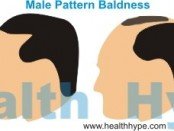
The average human scalp loses about 100 strands of hair per day. This hair loss is normal and represents a very small potion of the strands present on the scalp. Sometimes hair loss becomes excessive and may affect the entire head (diffuse hair loss) or patches (focal hair loss). There are several different types and >> Read More ...
The hair follicles go through different phases of growth. At any one time, most of the follicles are in the active growth phase known as the anagen phase. Majority of the remaining follicles are in a resting phase known as telogen, where there is no growth but rather preparation for future growth or shedding. A small >> Read More ...
What is Down Syndrome? Down syndrome, also known as Trisomy 21, is a genetic disorder resulting from possession of an extra copy of chromosome 21. It is named after Dr Langdon Down who first recognized and described the condition in 1866. The genetic origin of Down syndrome was identified much later by scientists in 1959. >> Read More ...
Viral hepatitis is inflammation of the liver caused by an infection with the hepatitis virus. There are five such viruses which can lead to an infection of the liver, some of which may progress to a chronic infection or only arise as a sequelae to liver disease. Liver function is affected to various degrees and with acute >> Read More ...
The meninges are membranes that cover and protect the brain and spinal cord. There are 3 layers known as the dura mater, arachnoid mater and pia mater. Dura mater is the tough outer membrane. It consists of 2 layers, the periosteal layer lying just beneath the skull and vertebra, and the inner meningeal layer lying towards >> Read More ...
Muscles are the motor units of the body. This means it makes different body parts move and allows substances to move within the hollow cavities of the body. There are broadly three types of muscles in the human body – skeletal muscle is attached to the bones (voluntary control), smooth muscle within the walls of >> Read More ...
The skin is laden with a rich network of blood vessels that contributes to the complexion particularly in lighter skinned individuals. Vasodilation causes redness of the skin whereas vasoconstriction results in a more pale hue. The face is prone to a phenomenon known as blushing where certain stimuli, particularly >> Read More ...